APEC Blog

Welcome to the APEC Blog! Your resource for finding insights and equipment solutions for process automation, ingredient handling, weighing and batching, and more. Whether you’re an animal or pet food manufacturer, working in the food production industry, or another manufacturing industry, we cover a wide range of topics to help improve efficiencies, maintain quality, and solve your production challenges.

With a variety of different blog types, we have the resources to support manufacturers looking to streamline operations, reduce downtime, and stay ahead of industry trends. Check out our latest articles below.

Hermetically Sealed Load Cells Explained

Though they’re often used in highly durable scales and heavy equipment, load cells themselves are somewhat delicate, and can easily be damaged by surrounding elements. This is what makes hermetic sealing so important. Hermetically sealed load cells are air- and water-tight, protecting the delicate measurement…
Read More

8 Advantages of Capacitive Digital Load Cells

In our previous post, we discussed problems engineers and scale dealers often face when working with traditional strain gauge scales and load cells, and solutions that can improve accuracy and durability. In many cases, utilizing capacitive digital load cells can help to avoid problems posed…
Read More

5 Strain Gauge Scale Problems and Solutions

Load cells are essential devices used in many processing systems, though we seldom think about them. Only when the load cell malfunctions and the strain gauge scale is inaccurate do we think about the workings behind the measurement.   When it comes to measuring ingredients–from…
Read More

Improving Accuracy in Automated Processing Systems: Improving Process Design

For automated processing to work in any industry, from food processing to chemical processing to pharmaceuticals and more, ingredients must be weighed accurately. In our previous post, we explained how to choose a load cell and scale instrument that works best for your mix. In…
Read More

Improving Accuracy in Automated Processing Systems: Finding the Right Load Cell

Automated systems have made food, pharmaceutical and chemical processing systems faster and more efficient. An important part of this process is the accurate weighing of ingredients. As ingredients have become more concentrated, the importance for highly accurate scales has increased. The challenge for many engineers…
Read More

5 Ways to Improve Feedlot Efficiency Through Automation

There are many factors affecting feedlot efficiency that operators cannot control. This makes the factors that operators can control even more important. Automation technology is one way that feedlot operators are finding ways to improve efficiency. With the right strategy and the right equipment, you…
Read More

11 Super Sack Handling Precautions to Prevent Injuries

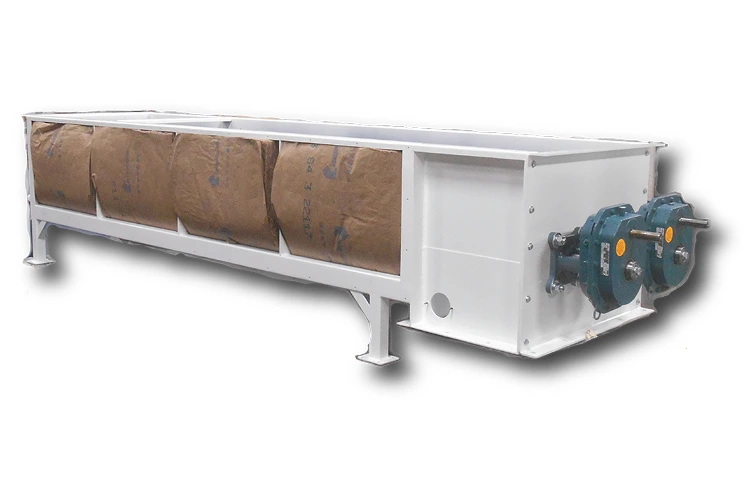
The increased use of super sacks in feed and pet food processing has saved operators hours in time, reduce costs, and helped to dramatically improve efficiency. A one-ton bulk bag (AKA super sack, flexible intermediate bulk container or FIBC) can take the place of forty…
Read More

Liquid Coating Processes for Uniform Snack Coating

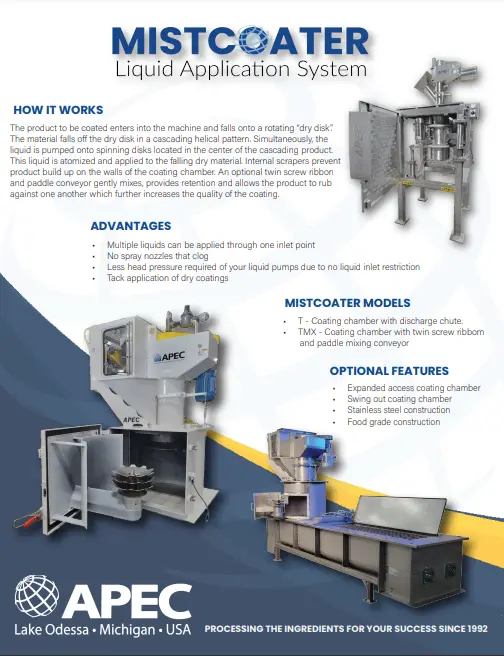
Whether for flavor, vitamin content, shelf life, or texture, liquid coating is the preferred application method for many cereals, snacks, pet food mixes, and more. Though this provides a number of efficient, time-saving advantages for snack coating, it can introduce some challenges if the process…
Read More

Part 2: Ingredient System Planning Pitfalls For Micro-Ingredient Scales, Conveyance and Controls

In the previous post, we discussed common problems that can occur with the start of a micro-ingredient system, including ingredient bins and feeders. The latter half of the system is generally more complex, and more issues usually arise here. In this blog post we’ll cover…
Read More

Part 1: Ingredient System Planning Pitfalls from Micro-Ingredient Bins to Feeders

Proper planning before an ingredient system redesign or new installation is pivotal to ensure the system runs efficiently.  With so many moving parts and considerations, it’s not easy to plan for every eventuality, and a few problems are consistently missed. In this blog post, we’ll…
Read More