

Freezing temperatures can affect more than exposed pipes. In a feed mill that is not temperature controlled, winter conditions can contribute to equipment problems, inconsistent material flow, poor feed quality and sanitation concerns.
While preventative maintenance plays an important role in avoiding these issues, winter reliability begins much earlier. Local climate and seasonal temperature changes should be considered when feed mill equipment and process systems are selected and designed.
Prevent Condensation and Moisture Problems
Condensation can form when a product or piece of equipment encounters air that is significantly warmer or colder than it is.
Pellet cooling is on example. Hot pellets are exposed to cold outside air during the cooling process. If the temperature difference is too great, pellets and fines may become wet and stick to the cooler walls. The resulting buildup can affect feed quality, make equipment more difficult to clean and create conditions that support mold and bacteria growth.
When designing equipment for a cold climate, consider where products or air will encounter significant temperature changes and how the resulting moisture could affect the process.
Maintain Liquid Addition System Temperatures
Liquid addition systems can be particularly vulnerable to cold conditions. Plumbing and pumps can freeze, while ingredients such as fat and molasses may thicken or congeal as their temperature falls.
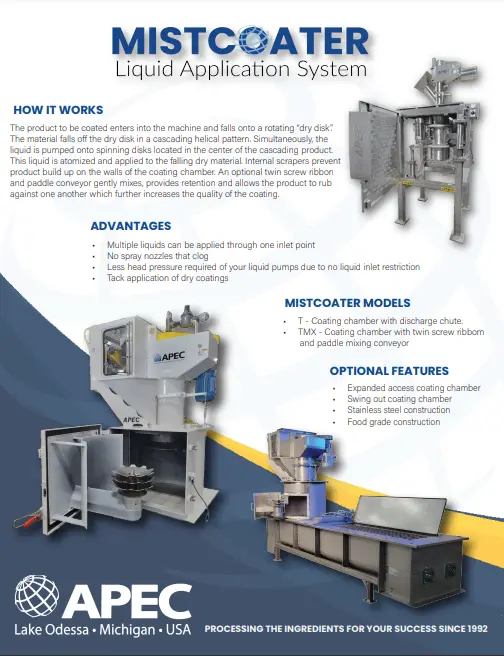
To maintain liquid at the proper temperature, the entire path from storage through application must be considered. For example, molasses may leave a heated tank at the proper temperature but begin to cool as it travels through unheated plumbing. If it then enters a cold mixer or Mistcoater, it can form clumps, stick to equipment and make the feed unusable.
Heat tracing uses steam or electricity to keep liquids and equipment at the necessary temperature. Depending on the application, heat tracing can be added to tanks, piping and processing equipment using heated jackets, electric heat tape, heating pads or steam lines.
Heat-tracing requirements are specific to each process. APEC offers both steam and electric heat-tracing options to meet the needs of the facility and application.
Protect Compressed-Air and Pneumatic Conveying Systems
Compressed-air systems may also be affected by freezing temperatures. Moisture inside an airline can freeze and interrupt the operation of air-actuated cylinders, valves and automated gates. When pneumatic conveying is used, frozen moisture may interfere with ingredient movement as well.
Because these components can affect multiple parts of an automated process, moisture and temperature conditions should be considered when planning the air system and locating its components.
During operation, slow, inconsistent or incomplete movement from an air-operated component may indicate that cold conditions are affecting the system.
Protect Feed Mill Equipment Expose to Winter Weather
Receiving and load-out equipment is frequently installed in areas exposed to snow, ice and other winter precipitation. Scales, controls and electrical components in these locations may require additional protection based on the facility layout and local weather conditions.
The design process should account for where equipment will be installed, how much exposure it will experience and how operators will access it for inspection and maintenance. These considerations can help protect sensitive components and make it easier to keep the equipment operating throughout the winter.
Design Feed Mill Equipment for Facility and Climate
There is no single winter equipment configuration that is appropriate for every feed mill. A mill operating through a northern winter may require a different approach to heating, insulation and component protection than one located in a consistently warm climate.
APEC considers the operating environment when recommending and designing feed mill equipment. A sales engineer can inspect the mill and evaluate factors such as:
- Local temperatures and seasonal weather conditions
- Whether the facility is temperature controlled
- The ingredients being stored, conveying and applied
- The location of tanks, plumbing and processing equipment
- Potential temperature changes throughout the process
- Exposure to snow, ice, and moisture
- Existing steam or electrical resources available for heat tracing
Evaluating these factors early allows heating, insulation and other protections to be incorporated into the feed mill equipment and system design instead of added only after winter problems occur.
Support Winter-Ready Design With Preventative Maintenance
Even equipment designed for cold conditions requires routine inspection. Before temperatures drop, confirm that the systems intended to protect the equipment are ready to operate.
A pre-winter inspection should include:
- Testing steam and electric heat-tracing systems
- Checking steam lines for leaks, damage or operating issues
- Inspecting tank and pipe insulation for damaged areas
- Examining electric heat tape and heating pads for wear
- Confirming that electrical wiring to protected and no wires are exposed
- Completing standard preventative maintenance on pumps, valves, hoses, seals, filters and lubrication points
Continue monitoring the equipment throughout the winter, particularly after severe weather or abrupt temperature changes. Small repairs to heat-tracing elements, pumps or valves are easier to address before they interrupt production.
Prepare Before Temperatures Drop
Planning for winter conditions during equipment design can reduce the likelihood of frozen components, material flow problems and moisture-related feed quality concerns. It also gives the feed mill a more reliable foundation for year-round production.
Whether you are planning a new system or addressing seasonal challenges within an existing process, APEC can evaluate your equipment, ingredients and operating environment to recommend an appropriate approach.
Contact APEC to discuss equipment and process solutions designed for the conditions inside your feed mill.