APEC Blog

Welcome to the APEC Blog! Your resource for finding insights and equipment solutions for process automation, ingredient handling, weighing and batching, and more. Whether you’re an animal or pet food manufacturer, working in the food production industry, or another manufacturing industry, we cover a wide range of topics to help improve efficiencies, maintain quality, and solve your production challenges.

With a variety of different blog types, we have the resources to support manufacturers looking to streamline operations, reduce downtime, and stay ahead of industry trends. Check out our latest articles below.

6 New Food and Workplace Safety Regulations For Grain and Pet Food Manufacturers in 2022

Recent changes in food, environmental, and worker safety have caused many grain and pet food engineers to take another look at their manufacturing facilities. For greenfield sites or renovations, appropriate attention to food and workplace safety regulations from the outset will save thousands in fines…
Read More
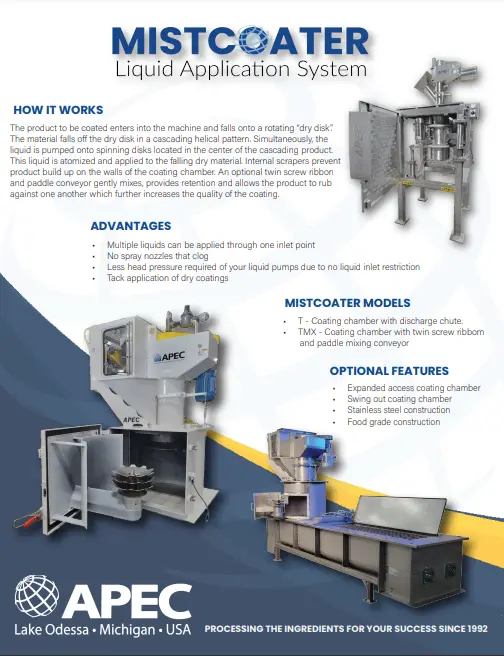
4 Steps for Effective Post-Pelleting Liquid Application

Post-pelleting liquid application can make it easier to add many essential ingredients to animal feed, including essential enzymes, vitamins and minerals. However, accurate, uniform coating can be a challenge. Pellet breakage and product loss can also be a challenge in post-pelleting liquid application. A few…
Read More

The Best Automation Upgrades for Feed and Pet Food Processors in 2022

  Improving efficiency in 2019 is a top priority for many feed mill and pet food processors. Automating processes or upgrading existing automation is often the way to maximize efficiency gains, but it can be difficult to know where to start. This roadmap of feed…
Read More

How to Control Mycotoxins in Feed Mills

Mycotoxins proliferate in grains and seeds, creating hazards for both human and animal consumption. Aflatoxins are among the most dangerous mycotoxins, and are most problematic for grain and feed mills. Mycotoxins thrive in hot, humid conditions. With temperatures steadily increasing around the globe and heavy…
Read More

Solving Liquid Coating Problems with Atomizing Systems

Getting the right liquid coating for snack foods, pet foods, and other products is already a difficult process. Finding a liquid coating system that can handle the coating efficiently and effectively is even more challenging. Some food manufacturers struggle to maintain the consistency of the…
Read More

Enzyme Applications for Animal Feed: Questions and Answers

[vc_row][vc_column][vc_column_text css=""]Enzymes essentially speed up chemical reactions, including metabolic reactions. There are many different types of enzymes, and many different ways to apply them to animal feed. They may be added in liquid or dry form, and the ideal application process depends on the type…
Read More

7 Ways Feed Mill Automation Drives ROI

In any industry, automation is based on goals: solving problems, minimizing risks, and reducing costs. The same is true for feed mill automation. There are a number of ways that feed mill automation can improve the end product and solve or reduce problems throughout the…
Read More

Choosing Specialty Coating Systems for Animal Feed Processing

The right specialty coating systems for animal feed will help to produce higher-quality end products while making the entire process more efficient. The wrong coating equipment during animal feed processing can introduce problems and inefficiencies. Which animal feed processing equipment works best depends on a…
Read More

Comparing and Contrasting Liquid Coating Equipment Solutions

There are a number of ways to apply liquid coatings to foods and pet food. Using the right liquid coating equipment solutions for your coating type and product can improve product quality, and reduce waste, maintenance expenses, and downtime. In this blog post, we’ll discuss…
Read More

4 Considerations for Choosing a Powder Handling Machinery Manufacturer

Working with powders can be a challenge. When your powder handling machinery is designed properly, you can not only improve efficiency, but also improve safety, reduce expenses, and extend equipment longevity. Getting the right equipment starts with finding the right manufacturer. When you’re looking for…
Read More