

Unplanned downtime, inconsistent batches, rising labor costs, and constant bottlenecks can quickly erode feed mill performance. When materials do not flow as expected or systems fall out of sync, production slows, costs increase, and product quality becomes harder to control.
These challenges are common but fixable. This guide outlines six proven, real-world ways to improve feed mill efficiency, focusing on the most common operational pain points and restoring consistent, reliable performance.
What Is Feed Mill Efficiency?
Feed mill efficiency is the extent to which a facility converts raw materials, energy, and labor into finished feed products.
It includes:
- Production speed and throughput
- Energy consumption
- Labor utilization
- Product consistency
- Waste and error reduction
Improving efficiency in feed milling means producing more output with fewer resources while maintaining quality and safety.
What Causes Inefficiency in Feed Milling?
Fixing inefficiency in feed mills starts by understanding what causes it. There are many common contributing factors:
- Manual handling of materials
- Equipment bottlenecks or idle time
- Inaccurate ingredient handling
- Poor coordination between systems
- Lack of monitoring or preventive maintenance
Fortunately, these are all preventable, and addressing these gaps creates measurable gains in performance.
Where Inefficiencies Occur in the Feed Mill Process
Most inefficiencies do not come from a single failure point. They occur at the handoff between stages, where timing, flow, or coordination breaks down.
In a typical feed mill, issues commonly appear in:
- Ingredient receiving and transfer, where inconsistent flow or manual handling slows throughput
- Grinding, where improper particle size creates downstream variability
- Mixing and batching, where timing gaps or inaccurate dosing impact consistency
- Conditioning and pelleting, where throughput limitations or variability reduce output quality
- Discharge and routing, where delays or misalignment create bottlenecks
Because each stage depends on the previous one, even small disruptions can cascade through the system. Identifying where these breakdowns occur is the first step in improving overall performance.
6 Ways to Improve Feed Mill Efficiency
1. Bulk Bag Ingredients and Unloading
Bulk bags can improve feed mill performance in several ways, particularly where manual handling is still common. While major ingredients like corn and other grains already benefit from bulk storage and fast filling, minor and microingredients are often still handled in 50 lb bags, creating unnecessary labor, delays, and variability.
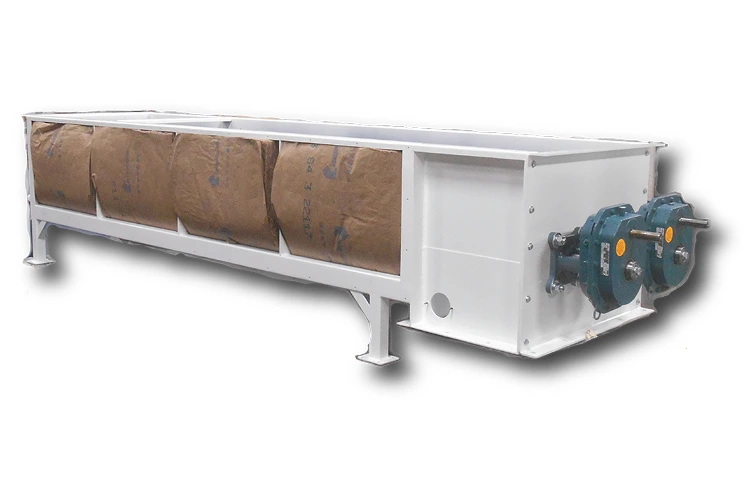
Replacing 50-pound bags with bulk bags or super sacks streamlines unloading, reduces repetitive lifting, and lowers the risk of injury. It also opens the door to cost savings through bulk purchasing while improving consistency in how materials are introduced into the system.
This upgrade is relatively simple to implement but delivers a meaningful operational impact. Start by working with a supplier that can provide ingredients in bulk packaging, which many already offer. Then, integrate a reliable bulk bag or super sack unloader designed to promote consistent material flow. With proper unloader design, materials discharge smoothly without constant operator intervention.
Result: Faster unloading, reduced labor strain, and lower material costs.
2. Automated Downstream Routing
Automating downstream routing ensures that materials are directed to the correct bin without delay. Instead of relying on manual input, sensors and control systems automatically redirect flow when a bin reaches capacity.
Position sensors or level indicators communicate with the control system to adjust routing in real time.
Result: Continuous material flow and reduced production interruptions.
3. Microingredient Automation
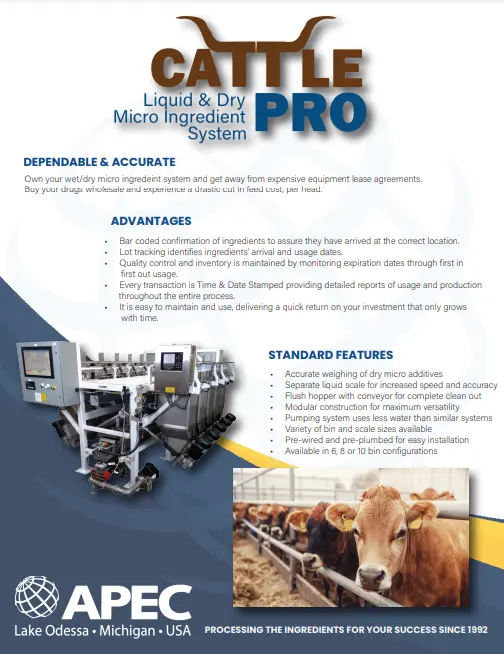
Microingredients require both precision and speed. Automating this process allows systems to feed, weigh, and dispense ingredients directly into the mixer, eliminating the need for manual scooping.
This reduces the risk of human error and frees up labor for higher-value tasks.
Result: Improved accuracy, reduced waste, and better labor utilization.
4. Coordinating Mixing and Filling Times
When the mixer and scales work in perfect harmony, there’s no idle time. If one system is waiting on another, productivity is lost.
Analyzing cycle times for filling, settling, weighing, and mixing helps identify imbalances. Adjustments such as adding equipment or modifying process timing can ensure everything keeps moving.
Result: Increased throughput and better equipment utilization.
5. Monitoring Equipment
Integrating sensors with control systems allows operators to monitor equipment performance in real time. Tracking vibration and temperature on bearings, gearboxes, and motors can reveal early signs of wear, misalignment, or contamination before they escalate into failures.
For example, a rise in bearing temperature on a grinder or conveyor may indicate friction or foreign material, while abnormal vibration can signal imbalance or component wear. Identifying these issues early helps prevent damage, reduce fire or explosion risk in dust-prone environments, and avoid costly unplanned shutdowns.
Result: Reduced maintenance costs, improved safety, and fewer unplanned shutdowns.
6. Reducing Equipment Damage Through Preventive Maintenance
Equipment failure can halt production and lead to costly repairs. A structured preventive maintenance program helps avoid these disruptions.
Regular tasks such as lubricating bearings, maintaining seals on mixers, checking belt tension, cleaning systems, and inspecting electrical components extend equipment life and improve reliability.
Result: Less downtime, longer equipment lifespan, and more predictable operations.
Impact of Feed Milling Optimization
| Factor | Impact of Poor Efficiency | Benefit of Optimization |
| Energy | Higher operating costs | Reduced consumption |
| Throughput | Slower production | Increased output |
| Labor | More manual intervention | Streamlined operations |
| Quality | Inconsistent product | Reliable performance |
Even incremental improvements can produce significant long-term savings.
Frequently Asked Questions About Feed Mill Efficiency
What is feed mill efficiency?
Feed mill efficiency measures how effectively a facility converts inputs like raw materials, energy, and labor into finished feed products.
How can feed mill efficiency be improved?
Efficiency improves through automation, better material handling, equipment monitoring, and optimized coordination between processes.
What affects feed mill performance the most?
Key factors include equipment condition, process timing, ingredient handling, and system automation.
Why is feed mill efficiency important?
Higher efficiency reduces costs, increases production capacity, and improves product consistency and safety.
Key Takeaways
- Feed mill efficiency impacts cost, throughput, and product quality
- Automation and process coordination are major drivers of improvement
- Preventive maintenance and monitoring reduce downtime and risk
- With the right upgrades and planning, feed mills can operate more efficiently, safely, and consistently while meeting increasing production demands.
Improve Feed Mill Performance With the Right System Design
Improving feed mill efficiency is not about a single upgrade. It is about identifying where your process breaks down and implementing targeted solutions that keep materials moving, reduce operator dependency, and maintain consistent output across every stage of production.
Whether you are dealing with bottlenecks in ingredient handling, inconsistencies in mixing, or unplanned downtime from equipment issues, the right system design can help eliminate these challenges and create a more stable, predictable operation.
If you are evaluating ways to improve feed mill performance, contact APEC to discuss your system and identify the right upgrades for your operation.