


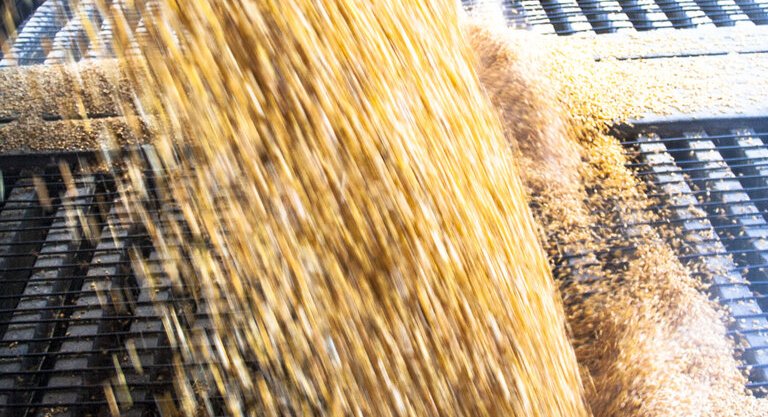
Powder flow problems can cause frustration and hours of expensive downtime. These issues occur when bulk materials do not move consistently through processing equipment, leading to blockages, inconsistent output, or material buildup.
In this guide, we’ll show you how to improve powder flow by identifying common issues and applying targeted solutions. By addressing these issues, you can improve efficiency, reduce downtime, and maintain consistent product quality across your manufacturing operations.
5 Powder Flow Problems and Proven Flow Control Solutions
Problem #1: No Flow
Under normal operating conditions, powder should flow through the system without interruption. If no-flow alerts are a regular occurrence, the system is not optimally designed for either the material or the environment. This may occur in environments with high humidity, in materials with high moisture content, in irregularly shaped solid materials, or in materials with certain coatings.
Solution: Agitation
No-flow issues with powder are often due to insufficient agitation. This can be addressed by adding a mechanical agitator before the feeder entry or a vibrator to the hopper. Air pads can also be used to aerate the product and improve flow.
When making these upgrades, make sure to conduct proper testing. Consider carefully where and how to mount the devices, and how often they should operate to be most effective.
Problem #2: Low Flow
This powder flow problem may go unnoticed for long periods because it doesn’t directly cause downtime. However, insufficient flow can affect all downstream systems. Low flow may be caused by obstructions above the feeder, or misalignments. This may also occur if the materials are too thick or the feeder is too small.
Solution: Bigger or Faster Feeder
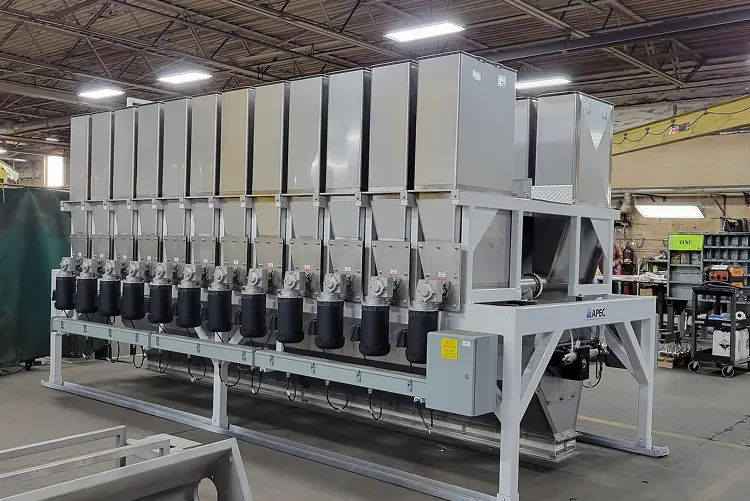
To improve powder flow in this situation, you’ll want to either expand the feeder to increase volume at slower speeds, or speed up the feeder to push more material through faster.
- Upgrade to a larger feeder
- Add variable frequency drive
- Change the reducer on the drive
Problem #3: Decreasing Flow
If your powder flow was once sufficient but is now declining, that’s a different issue. Unlike other powder flow problems caused by materials sticking together, this decreasing flow is generally due to static build-up that causes materials to stick to the feeder.
Solution: Eliminate Static
Static build-up is common in fast-moving, dry materials and can cause powder to cling to the feeder, restricting flow. Fortunately, this issue is typically easy to address with a few straightforward adjustments:
- Ground the feeder frame to prevent static build-up
- Use electropolishing to reduce surface friction
- Apply a Teflon coating to minimize material adhesion
Problem #4: Material flooding
If too much material passes through the system, or if material continues to flow after shut-off, it can create downstream production issues and lead to inconsistent product quality.
Solution: Slow and Control the Feed
Controlling the rate and consistency of powder flow can help prevent flooding and improve overall system performance. Common solutions include:
- Venting the hopper to reduce aeration
- Installing a slide gate or butterfly valve at the discharge point
- Using a smaller feeder
- Reducing the drive speed
- Adjusting the feeder incline
Problem #5: Clumping
When powders lump together, they can restrict or block flow at various points in the process. This often leads to inconsistent material movement, poor mixing, and downstream inefficiencies. Clumping can also create pockets of material that do not process evenly, which may impact product quality and, in some applications, increase the risk of contamination.
Solution: Reduce Cohesion
Clumping is typically caused by excess moisture, static buildup, or variations in material quality. To reduce cohesion and improve powder flow, start by identifying when and where clumping occurs. Evaluate environmental conditions such as humidity levels, review material consistency between batches, and observe whether clumping is tied to a specific stage in the process.
Once the root cause is identified, targeted adjustments, such as controlling humidity, reducing static, or improving material handling, can help prevent clumping and restore consistent flow.
Importance of Powder Properties
Proper powder flow starts with understanding the material itself and designing equipment to work with its characteristics. When your equipment manufacturer has a good understanding of the powder’s material characteristics, they can design optimal machinery to prevent powder flow problems.
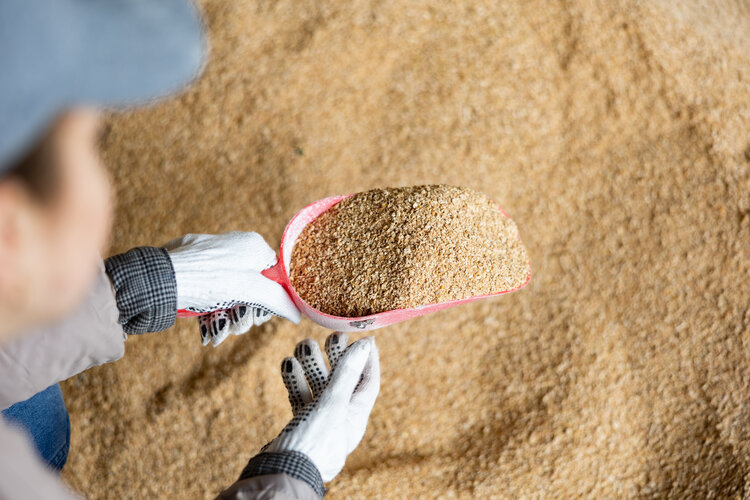
Before working with your equipment manufacturer, it’s helpful to have measurements of applicable powder characteristics. There are many physical properties of powders, and which are most important will depend on the process and the industry. In this case, we’re considering the physical properties of food powders for human or animal consumption.
- Density: There are multiple aspects of a powder’s density that can affect how it is stored, how it flows, and how it’s processed: bulk density, particle density, loose bulk density, and compact density. In general, you should at least have measurements for the powder’s bulk density.
- Flowability: Flowability refers to how the powder moves from one process to the next, and how it settles within a container. There are several properties within flowability that may be important, including angle of repose and how the product settles. A product with a steep angle of repose will not fill a vertical container evenly, so it may require additional safeguards.
- Cohesion: A key factor in flowability, cohesion refers to a powder’s tendency to stick together and form lumps, which can significantly impact storage and processing. It may result from natural stickiness, static charge, moisture, or other factors. If moisture plays a role, hygroscopic properties should also be evaluated.
- Aeration: This is another aspect of flowability. If a powder is prone to aeration, it will become loose and create dust easily. These types of powders should not be subjected to freefall, as they will create dust and powder explosion hazards. For these types of powders, dust suppression equipment will be particularly important.
- Particle uniformity: Particle size and the variation between particle size also affect how the material flows and how it’s processed. If two particles in the powder vary significantly in size and shape, the powder is prone to separation, which can affect product quality.
- Abrasion: Many powders can be deceptively abrasive. A powder that may seem soft in our hands can become damagingly abrasive at higher velocities and in high volumes. Powders with abrasive characteristics will require special equipment considerations, such as linings or coatings, to prevent premature equipment wear.
Improve Powder Flow with the Right System Design
If your current system is experiencing frequent powder flow problems or if material changes are introducing new challenges, these solutions can help restore consistency and performance. For new systems, taking a proactive approach through material testing and thoughtful design can prevent many of these issues before they start.
By understanding your material properties upfront and validating performance before installation, you can ensure your system is built to handle your specific application.
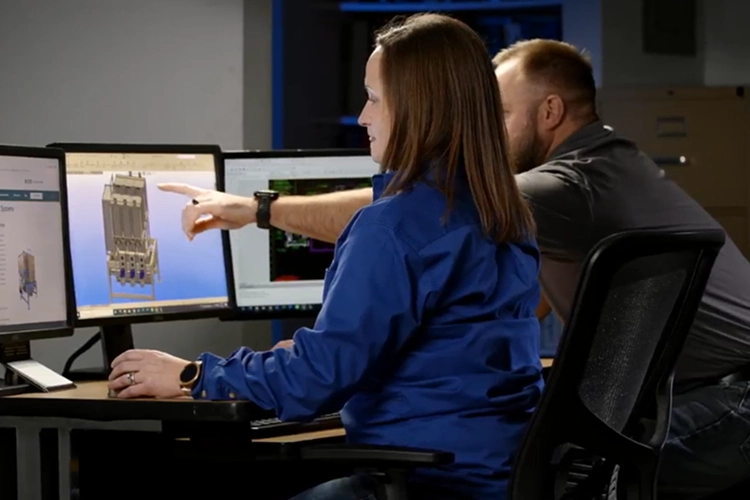
APEC has the expertise to evaluate your materials, test system performance, and design equipment that delivers reliable, efficient powder flow. Contact our team to get started.[/vc_column_text][/vc_column][/vc_row]
2 thoughts on “5 Powder Flow Control Problems And How to Fix Them”
Comments are closed.