

Mixing ingredients may seem like a simple process, but it is more than just combining ingredients. When you have ingredients that you do not want to mix together or you have a large amount of ingredients to mix, the type of industrial mixer comes into play. Industrial mixing equipment has revolutionized many different industries contributing an important role in large-scale production of all types. For the purpose of this blog, we are referring to an industrial mixer as a piece of equipment that mixes materials together as a part of a larger production process. This could include mixers used in food processing, chemical processing, pharmaceutical products, plastic processing and more.
Industrial Mixer Categories
Categorizing industrial mixers, agitators, and other industrial mixing machines can be more difficult than expected. Even if mixers look similar, they can be used for vastly different applications. With this in mind, we are categorizing mixers mostly based on their design in this blog. Other ways industrial mixing equipment can be categorized include:
- Industry: Mixers are used in various industries and they may be categorized this way.
- Matter: Some mixers are designed to mix gases, liquids, solids or any combination thereof.
- Force: Difference mixers use different types of force to blend materials together, such as gravity, rotation, pressure, shear and more.
- Function: Some mixers are meant to combine two materials that do not normally combine, while others create a completely homogeneous mixture.
Keep in mind that this is not an exhaustive list. In this blog, we will look at some of the most common types of industrial mixers, how they work and the advantages and challenges of each type.
#1 Horizontal Ribbon Mixer
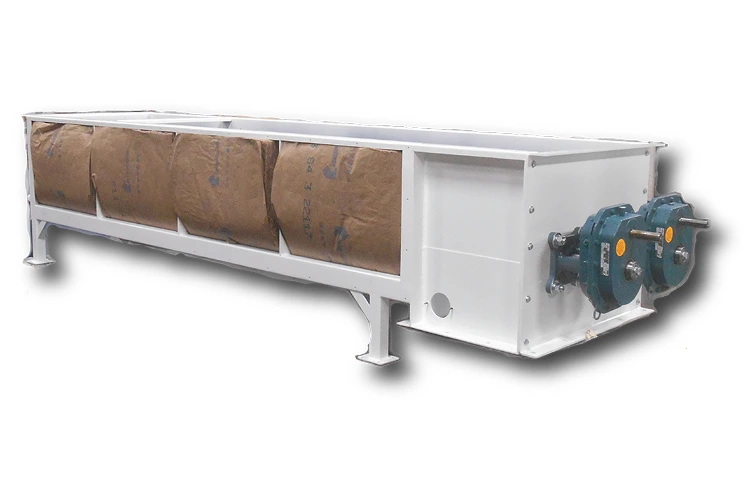
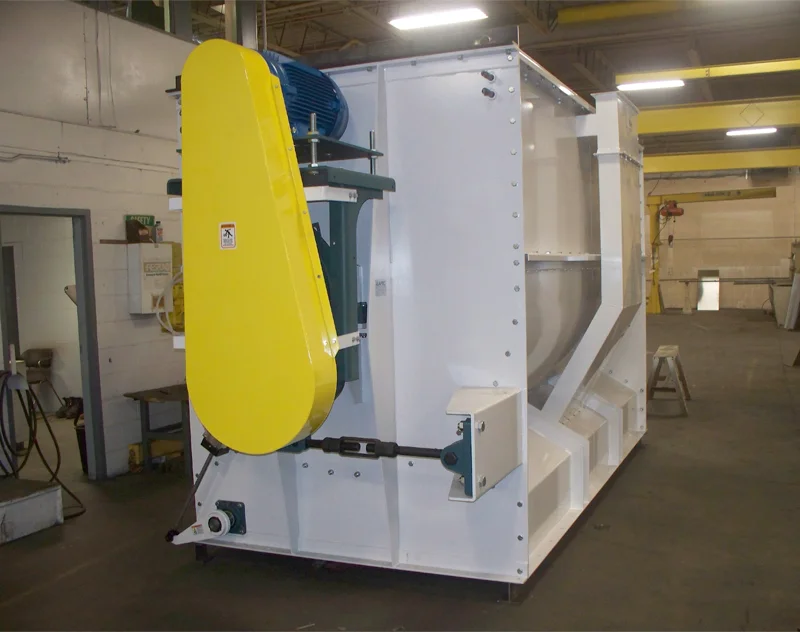
A ribbon mixer, also known as a ribbon blender, uses two intertwined metal strips, similar in shape to a double helix, to move material from one side of the mixer to another. As the material passes in each direction, it mixes together. Horizontal ribbon mixers are used in a variety of industries, including food processing and chemical, and are often used in mixing powders and other solids. They are easy to clean and offer precise mixing capabilities. A challenge of the horizontal ribbon mixer is there can be issues with mixing uniformity.
#2 Paddle Mixer
A paddle mixer is similar to a horizontal ribbon mixer, except that the mixing action is gentler. As the paddles move the material through the mixer, they create a cohesive mix. This type of industrial mixer is often used with thick or viscous semi-solids, such as salad dressings or salsa. A paddle mixer provides efficient, gentle blending, but it can experience weakness in mixing suspensions.
#3 Tumbler Mixer
A tumbler mixer turns and uses gravitational force to mix materials, which are usually liquids. There are several different types of tumbler mixers, including a v-shaped mixer, double-cone mixer and slant mixer. A tumbler does not require an agitator or impeller, which makes it useful for sensitive liquids. Tumbler mixers are versatile in the various types of ingredients they can mix. They are large pieces of equipment that require floor space.
#4 Emulsifier
The emulsifier mixes together substances that are immiscible, which means they are unable to naturally blend. An emulsifier uses high amounts of pressure to force liquids through small filters and tubes, which breaks down their structure and allows the liquids to mix effectively. This makes emulsifiers common in food processing and chemical processing applications. The emulsification process can be influenced by factors such as the amount of mechanical energy used and physiochemical limitations.
#5 Drum Mixers
Drum mixers are highly versatile pieces of equipment. They are available in many different types and configurations, but drum mixers tend to share the same design. They are made from large tanks called drums and they can be used for storage as well as mixing. Drum mixers are usually used for materials with low or medium viscosity, such as slurries or cement. They can hold a large volume of material, but they also require a learning curve for operation.
#6 Static Mixers
Static mixers are usually used to mix gases, liquids, or liquids and gases together. They may use a series of internal blockages or baffles that force the materials together and break down the substances so they mix, similar to an emulsifier. Because they have no moving parts, static mixers are commonly used in chemical processing, water treatment, and other continuous-flow applications where low maintenance and reliable operation are important. Static mixers can run into challenges with capacity and mixing effectiveness.
#7 Planetary Mixer
A planetary mixer uses agitators moving in a circular pattern to mix materials in a bowl or tank. The mixing vessel may be stationary or rotating to aid the mixing action. It can use paddles, whisks or beaters to blend the material. Planetary mixers are typically used as commercial food mixers to blend dough and similar foods. They usually need a high volume of power to operate effectively, which can have limitations.
How to Choose the Right Industrial Mixer?
There are several types of industrial mixers and mixing equipment, each offering unique advantages for different applications. Contact APEC today to discuss your process requirements and determine which industrial mixing equipment is right for your system.