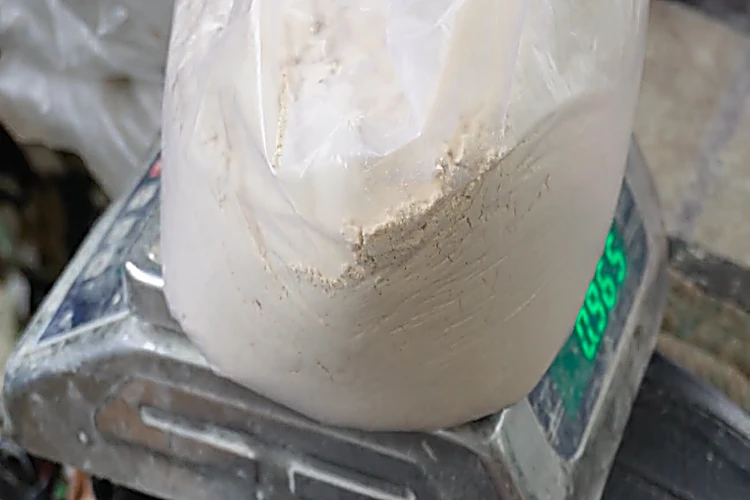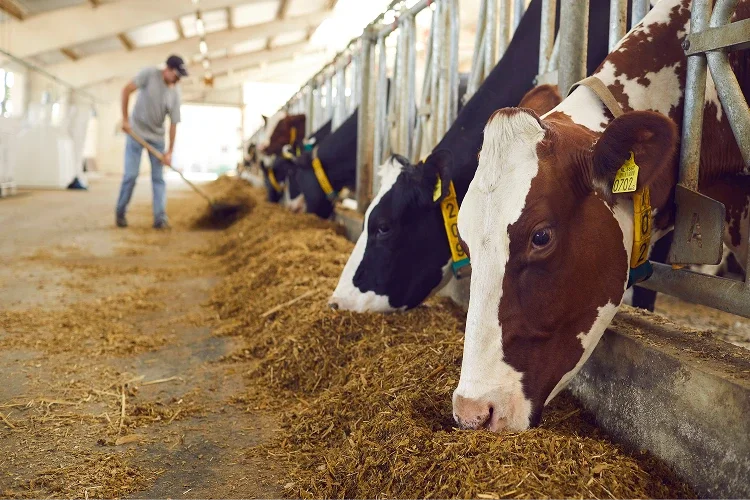


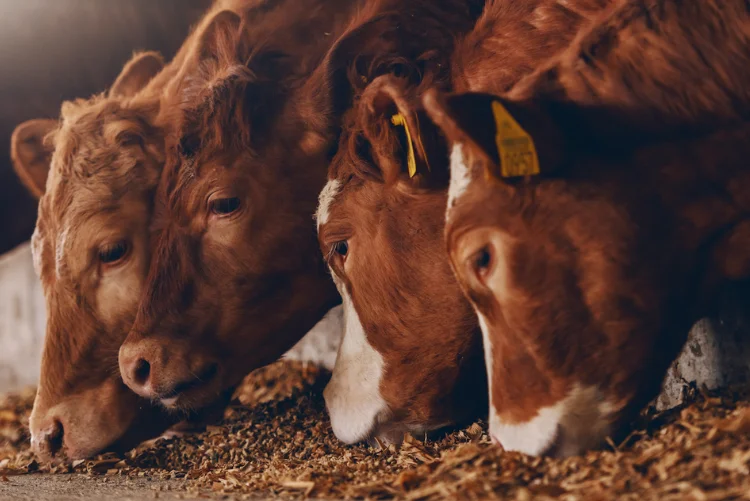
When you save money on cattle feed, you can make your feedlot more efficient. There are a variety of ways to reduce cattle feed costs, from choosing ingredient suppliers to improving ingredient accuracy, reducing waste, and automating feed mixing. Streamlining the feed mixing process, introducing automation in cattle feed production and perfecting your ingredient usage can help you reduce costs on cattle feed in many ways. The Cattle Pro Liquid & Dry Microingredient System is designed to make cattle feed mixing easy, and help feedlot managers save money on cattle feed.
How Can Feedlots Save Money on Cattle Feed?
Feedlots can save money on cattle feed by choosing flexible ingredient suppliers, buying ingredients in bulk, reducing ingredient waste, improving mix accuracy, limiting water use, automating manual tasks and reducing maintenance-related downtime.
The most effective cost-saving strategies usually come from improving control over ingredients and reducing waste throughout the feed mixing process.
Cost-Saving Strategies For Cattle Feed Production
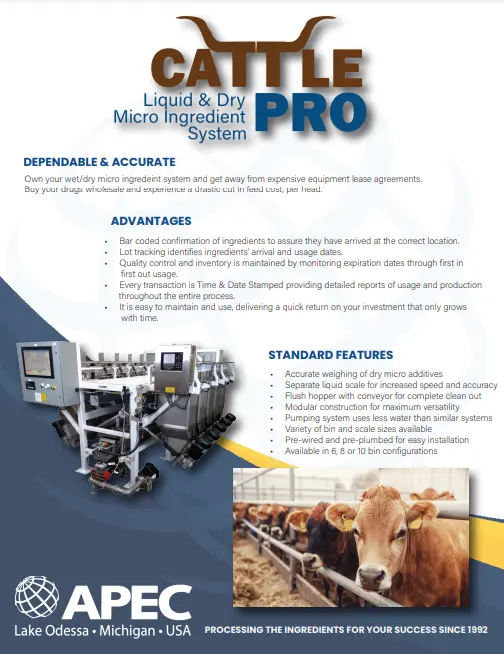
The Cattle Pro is a complete cattle feed mixing system capable of working with multiple dry and liquid ingredients. Multiple bins, feeders, scales and mixers working in tandem and coordinated by a simple, yet powerful controller helps to ensure that your cattle feed mix includes all of the ingredients your cattle need, in the right amounts. The micro scales and bins work with a high level of accuracy and the mixer is optimized to create a cohesive and uniform mix. Best of all, you’re not tied to a single supplier—you’re free to choose your own ingredient suppliers.
1. How Can Flexible Ingredient Sourcing Reduce Feed Costs?
Many cattle feed mixing systems are provided by nutrition or supplement suppliers. Using this equipment usually requires a contractual agreement with the supplier to use only their ingredients. In many cases, this requires feedlots to take on the extra costs of the ingredients, when cheaper options may be available.
With the Cattle Pro feed mixing system, there is no contract and no requirements to choose particular ingredients. APEC is not an ingredient supplier, and does not have contracts with any ingredient suppliers. We designed the Cattle Pro to work with many different types of ingredients, and customize each system to ensure it operates accurately and efficiently with your ingredients. Feedlot managers and owners are free to choose the most effective and affordable ingredients, and work with any supplier they choose.
Learn more about the Cattle Pro
Get the specs >
2. Can Buying Wholesale Ingredients Help Save Money on Cattle Feed?
Avoiding exclusive ingredient supplier contracts also gives feedlot managers and owners the ability to purchase ingredients wholesale. While this certainly is not required to operate the Cattle Pro effectively, it is worth considering if you’re looking for a cheap way to feed cattle. With a variety of bin sizes and scales, the Cattle Pro also makes it easy to raw materials for cattle feed production in bulk amounts. Depending on the suppliers you work with and their wholesale prices, you may be able to save money on cattle feed substantially.
3. How Does Reducing Ingredient Waste Lower Cattle Feed Costs?
The Cattle Pro is designed to measure ingredients with a high level of precision. This is particularly valuable for nutritional supplements, vitamins, minerals, antibiotics and other expensive additives. While hand-adding and hand-mixing often results in adding too much or too little of any ingredient, automated cattle feed mixing equipment adds the same amount every time. Regardless of how the ingredients are diluted or concentrated, the automated process will ensure that you get the right amount and you’re not paying for wasted ingredients.
4. How Can Accurate Mixing Help Reduce Cattle Feed Defects?
Healthy, fast-growing beef cattle require a careful mix of vitamins, minerals, hormones and other additives. For some ingredients, adding too much can cause defects and illness. Other ingredients can create deficiencies if cattle don’t get enough. Either situation will ultimately cost money; defects in feed quality will create defects in the cattle. Precisely measuring and automating the cattle feed mix, including microingredients, helps to prevent feed defects and subsequent issues with cattle.
5. How Can Reducing Water Use Help Lower Feed Costs?
The Cattle Pro is fully contained to reduce overspray of liquid ingredients. This not only helps to prevent waste of expensive liquid ingredients, but also helps to reduce water use. In areas affected by drought or those without water sources nearby, this is a great way to save money on cattle feed.
6. How Can Automation Free Up Time in Cattle Feed Production?
We all know that time is money. Automation in cattle feed production allows the Cattle Pro to automatically measure, dispense and mix action eliminates time-consuming tasks. This frees up staff for other jobs and makes your operation more efficient.
7. How Can Maintenance Costs Affect Cattle Feed Savings?
Every machine requires some amount of maintenance. While preventative maintenance can extend the life of your machine and prevent unscheduled downtime, unexpected repairs can create unexpected costs. The Cattle Pro doesn’t use proprietary parts, so it’s easy to maintain and repair using off-the-shelf parts when needed. The flush hopper also makes the system easy to clean. The modular construction and stainless steel components also makes the machine easy to maintain.
Save Money with Automation in Cattle Feed Production
Improving the speed and efficiency of your cattle feed operation through automation is one way to save money. Reducing waste, optimizing maintenance, and avoiding supplier contracts can also help. Take a look at our Cattle Pro system page to learn more about our cattle feed mixing system. If you’re interested in saving money and improving efficiency with the Cattle Pro, contact us. We’ll give you a quote and answer any questions you may have.