

Ingredient handling systems are often designed around a set of expected material characteristics and assumed material flow properties. Engineers assume a certain bulk density, flow behavior or moisture range when selecting feeders and designing hoppers.
In practice, ingredient properties rarely remain perfectly consistent. Changes in suppliers, seasonal raw material variation, storage conditions and production lots can all affect how a material behaves. Even small changes in material flow properties can create noticeable ingredient flow issues in feeding and batching systems.
Understanding ingredient feed properties and accounting for them during system design is essential for maintaining consistent, reliable performance.
Common Problems Caused by Material Behavior
Material behavior can be the cause of several common performance issues with ingredient feeding systems:
- Inconsistent or fluctuating feed rates
- Poor batching or weighing accuracy
- Bridging or ratholing in hoppers
- Erratic feeder performance
- Dusting or material segregation
- Increased operator adjustments or intervention
- Unexpected production slowdowns or downtime
In many cases, teams initially try to solve these problems through mechanical adjustments, feeder tuning or control system changes. The problem, however, may not always be mechanical. It could be a mismatch between how the material behaves and how the system was designed to handle it.
Material Flow Properties That Affect Feeding
Several bulk material flow properties play a significant role in how ingredients move through feeders, hoppers and batching systems. When these properties change, system performance can change with them.
Bulk Density Variability
Bulk density is one of the most important factors affecting feeding accuracy. If a feeder is calibrated based on a certain density and the actual material density changes, the system may begin delivering more or less material than intended.
Bulk density can vary due to:
- Different ingredient suppliers
- Variations in processing methods
- Particle size changes
- Moisture content
Even moderate shifts in bulk density can affect volumetric feeder performance and batching accuracy.
Flowability
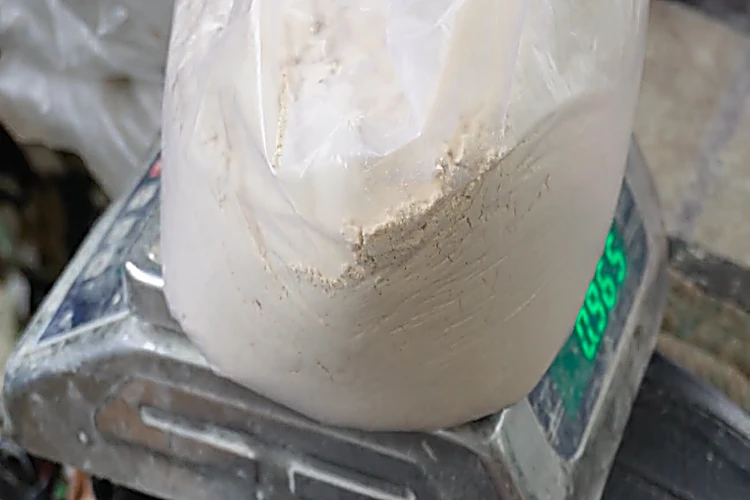
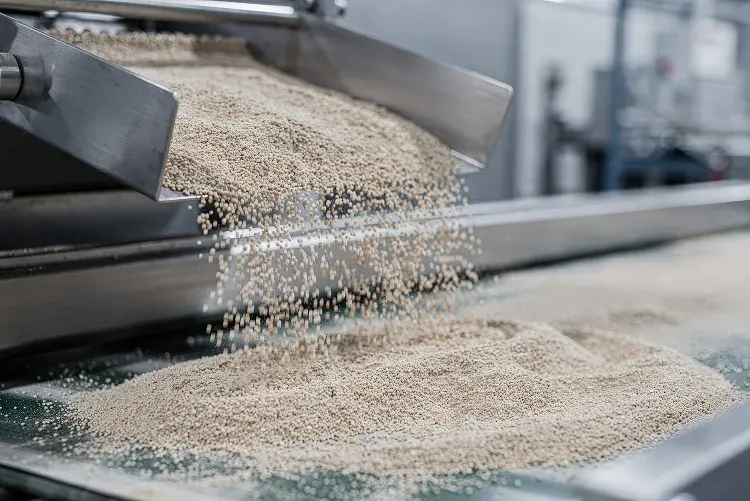
Some materials flow easily through hoppers and feeders, while others are more cohesive and prone to sticking or clumping. Fine powders, for example, often behave very differently from granular materials.
Materials with poor flowability may cause:
- Bridging across hopper outlets
- Ratholing, where only a narrow channel of material flows
- Intermittent or inconsistent feeder discharge
Understanding flow behavior is critical when designing hopper geometry and selecting feeder types.
Particle Size and Distribution
Particle size distribution can influence how ingredients move, compact and segregate during handling. Materials with a wide range of particle sizes may separate during storage or transport, leading to inconsistent feeding behavior.
Changes in particle size can also affect packing characteristics, which in turn impacts bulk density and flowability.
Moisture Content
Moisture can significantly change how ingredients behave. Some materials absorb moisture from the air, while others may clump or cake when exposed to humidity.
Higher moisture levels can increase cohesion, reduce flowability and cause materials to stick to equipment surfaces.
Compressibility and Aeration
Certain materials compress under pressure, especially when stored in tall hoppers. Others may trap air and become aerated, causing them to behave almost like a fluid.
These behaviors can influence discharge rates, feeder accuracy and overall system stability.
Why Ingredient Changes Disrupt Systems
Many facilities operate systems that run reliably for years until something seemingly minor changes. Suddenly, feeders require constant adjustment or batching accuracy begins drifting.
Often, the trigger is a change in the ingredient itself.
Examples include:
- Switching to a new supplier
- Reformulating a product
- Receiving a different production lot
- Seasonal variation in raw materials
- Changes in storage or environmental conditions
Even when ingredients appear identical, their flow properties may differ enough to affect system performance. If the system was originally designed around a specific set of material characteristics, those changes can create new challenges.
Evaluating Material Flow Properties
Because ingredient behavior plays such a central role in system performance, evaluating bulk material flow properties should be an important step during system design and troubleshooting.
Material evaluation may include:
- Measuring bulk density and its variability
- Assessing flowability under different conditions
- Observing how the material behaves during discharge
- Evaluating particle size distribution
- Identifying moisture sensitivity
These insights help engineers understand how bulk materials will behave in real operating conditions and provide a foundation for designing feeding systems that prevent ingredient flow issues and perform reliably.
Designing Systems Around Material Flow Properties
Instead of expecting ingredients to behave consistently, engineers must account for variability and design equipment that can handle those changes.
Key considerations may include:
- Selecting feeders that match the material’s flow characteristics
- Designing hopper geometry that promotes reliable discharge
- Incorporating agitation or flow aids when necessary
- Developing appropriate calibration strategies
- Planning for variability in bulk density and flow behavior
When systems are built with these factors in mind, they are more likely to maintain stable performance even as material properties change.
How APEC Helps Solve Flow Challenges
APEC works with manufacturers to better understand how their materials behave and how those characteristics affect system performance. Support may include:
- Material evaluation and testing
- System design consultation
- Feeder selection guidance
- Troubleshooting performance issues
If your operation is experiencing inconsistent feeding performance or you are planning a new system, evaluating ingredient flow properties can make a significant difference.
Talk to APEC about designing a system around your material characteristics.